
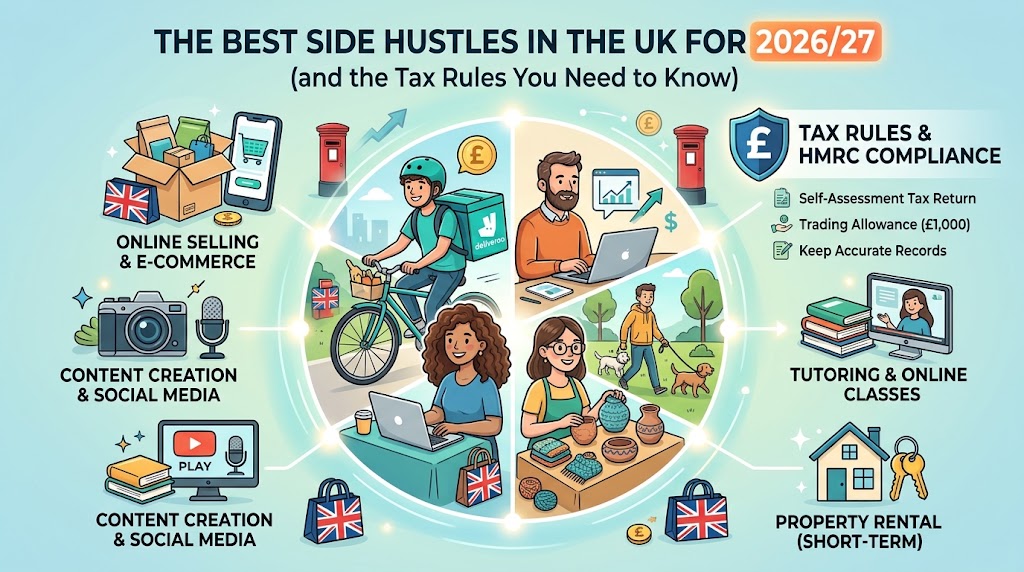
The Best Side Hustles in the UK for 2026/27
With bills still high and wages struggling to keep up, millions of people in the UK are looking for a way to earn a little extra. A side hustle can cover a monthly bill, build an emergency fund, or become the first step towards running your own business.
The trick is to pick something that fits your skills and your schedule, and to stay on the right side of HMRC from day one. This guide covers both.
How to choose the right side hustle
Before jumping into the latest idea from social media, ask yourself four questions:
- How many hours can I really give each week? Be honest. Five reliable hours beat twenty hours you never find.
- What can I already do? Your job, your hobbies and what friends ask you for help with are the fastest route to your first pound.
- Do I want to trade time for money, or build something that scales? Freelancing pays quickly; a blog or digital product takes longer but can earn while you sleep.
- How much can I invest upfront? Many good side hustles cost almost nothing to start.
12 side hustles that work in the UK
Selling online
1. Reselling clothes and items. Selling what you no longer need on platforms like Vinted or eBay is the easiest start. Some people move on to buying underpriced items at charity shops and car boot sales and reselling them.
2. Handmade products. Candles, jewellery, prints or personalised gifts can sell well on marketplaces such as Etsy, especially before Christmas.
3. Print on demand. You create designs, a partner company prints and ships t-shirts, mugs or posters only when someone orders. No stock, but margins per item are small.
Selling your skills
4. Freelancing. Writing, graphic design, video editing, bookkeeping, web design or virtual assistance can be offered on freelance platforms or directly to local businesses.
5. Online tutoring. If you are strong in maths, English, science or a language, tutoring pupils before GCSEs and A-levels is in steady demand, online or in person.
6. Social media management. Many small businesses know they should post regularly but have no time. Managing two or three accounts can bring a regular monthly income.
Local services
7. Pet sitting and dog walking. Low startup costs, flexible hours, and demand everywhere.
8. Cleaning, gardening and odd jobs. Reliable, well-reviewed local help is always sought after. Insurance is worth considering.
9. Delivery and driving. Food delivery and courier apps offer flexibility, but factor in fuel, wear on your vehicle and insurance before calculating what you really earn.
Using what you own
10. Renting a spare room. The government’s Rent a Room scheme lets you earn a set amount tax-free from furnished accommodation in your own home. Check the current threshold on GOV.UK.
11. Renting out a parking space or storage. If you live near a station, stadium or city centre, a driveway can earn money with very little effort.
Building something long-term
12. Blogging, YouTube or self-publishing. A blog with affiliate links, a YouTube channel, or an e-book on Amazon KDP takes months to grow, but can turn into a lasting source of income. It suits people who enjoy writing, teaching or creating.
| Side hustle | Startup cost | Time to first income | Scales? |
|---|---|---|---|
| Reselling | Very low | Days | Limited |
| Freelancing | Very low | Weeks | Medium |
| Tutoring | Very low | Weeks | Limited |
| Pet sitting | Very low | Weeks | Limited |
| Handmade products | Low to medium | Weeks | Medium |
| Blog, YouTube, e-books | Low | Months | High |
Side hustle tax: what HMRC expects in 2026/27
The 2026/27 tax year runs from 6 April 2026 to 5 April 2027. Here are the rules that matter most.
The £1,000 trading allowance
Every individual gets a £1,000 trading allowance per tax year. If your gross income from trading (before expenses) is £1,000 or less, you usually don’t need to register for Self Assessment or pay tax on it.
Two details people often miss:
- It’s per person, not per side hustle. If you sell on Vinted, walk dogs and do some freelance design, all that income is added together against the same £1,000.
- It’s based on income, not profit. £1,200 of sales with £500 of costs is still above the threshold.
Above £1,000: register for Self Assessment
If your gross trading income goes over £1,000 in a tax year, you usually need to register for Self Assessment by 5 October following the end of that tax year, then file your return and pay any tax by 31 January.
You can then choose between deducting the £1,000 allowance or your actual expenses, whichever is better for you. Your profit is added to your other income and taxed at your marginal rate. The personal allowance remains £12,570 for 2026/27.
Selling your own unwanted things
Clearing out your wardrobe or loft is generally not trading. HMRC looks at whether you are buying to resell, making items to sell, or otherwise trading with a view to profit.
Platforms now report to HMRC
Online marketplaces and gig platforms are required to share information about sellers’ income with HMRC once certain thresholds are met. This didn’t create a new tax, but it means HMRC can more easily match platform income against tax returns. Keeping simple records from the start avoids unpleasant letters later.
Making Tax Digital
From April 2026, Making Tax Digital for Income Tax applies to people whose gross business or property income is over £50,000. Most side hustlers are well below this, but it’s worth knowing as you grow.
Getting started: a 7-day plan
- Day 1: List your skills, possessions you could sell or rent, and the hours you have each week.
- Day 2: Pick one side hustle from the list above. Just one.
- Day 3: Look at what others charge and decide your price.
- Day 4: Create your profile, listing or simple one-page website.
- Day 5: Tell friends, family and local groups what you offer.
- Day 6: Set up a basic spreadsheet to track income and expenses.
- Day 7: Deliver your first job or list your first items, then review what worked.
Mistakes to avoid
- Paying for “get rich quick” courses before earning your first pound.
- Ignoring tax until HMRC writes to you.
- Underpricing your time and ending up exhausted for very little.
- Spreading yourself across five ideas at once.
- Breaking your employment contract: check it for clauses about outside work.
Frequently asked questions
Will my employer find out about my side hustle?
Self Assessment is between you and HMRC. However, your contract may require you to declare outside work, so check it first.
Do I need to set up a limited company?
No. Most side hustlers start as sole traders. A limited company may make sense later, once profits are significant; an accountant can advise.
Can I have a side hustle while on Universal Credit?
Yes, but you must report your earnings, and they can affect your payment. Check the rules on GOV.UK before starting.
Final thoughts
The best side hustle is the one you’ll actually stick with: something that fits your skills, your schedule and your goals. Start small, keep records from day one, and keep an eye on the £1,000 trading allowance.
If you’d like to build a side business on deeper foundations, Entrepreneurship with “I AM” combines faith and strategy in 14 chapters, with a practical 30-day action plan.
This article is general information, not tax advice. Rules and thresholds can change; check GOV.UK or speak to an accountant about your situation.

0 Comments