
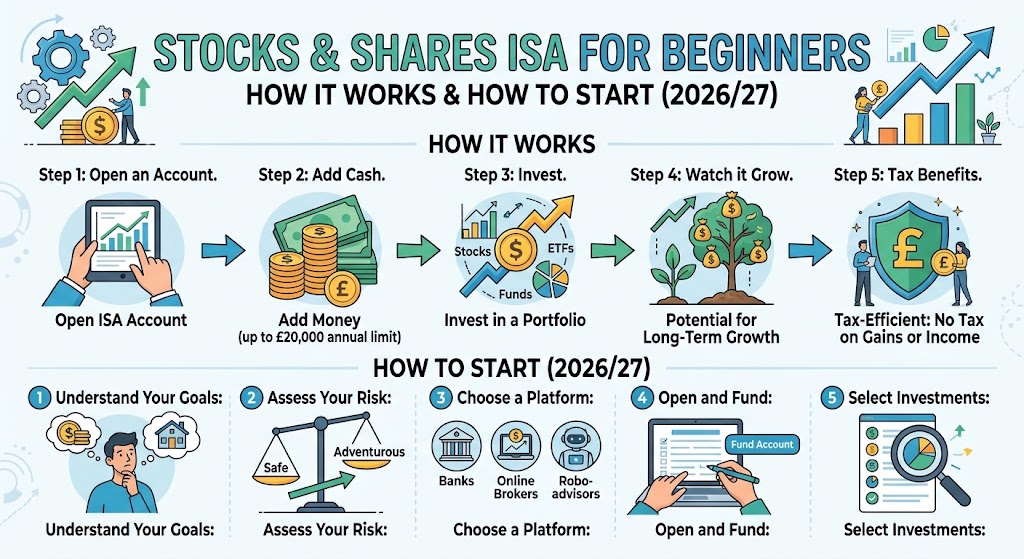
Stocks and Shares ISA for Beginners
If you live in the UK and want to start investing, a Stocks and Shares ISA is usually the best place to begin. Any growth, dividends and interest inside it are free from UK income tax and capital gains tax, and you don’t even need to mention it on a tax return.
This guide explains how it works, what’s changing from April 2027, and how to make your first investment.
What is an ISA?
An Individual Savings Account (ISA) is a tax-free wrapper. It isn’t an investment in itself: it’s a container that protects what you put inside it from tax.
There are several types:
| ISA type | What it holds | Key point |
|---|---|---|
| Cash ISA | Cash savings | Interest is tax-free, no investment risk |
| Stocks and Shares ISA | Funds, ETFs, shares, bonds | Growth and dividends are tax-free; value can fall |
| Lifetime ISA | Cash or investments | For a first home or retirement, with a government bonus |
| Innovative Finance ISA | Peer-to-peer lending | Higher risk |
| Junior ISA | For children | Separate allowance |
The ISA allowance for 2026/27
For the 2026/27 tax year (6 April 2026 to 5 April 2027), you can pay up to £20,000 into ISAs in total. You can split it across different ISA types in any way you like, and since April 2024 you can pay into more than one ISA of the same type in a tax year.
Two things to remember:
- The allowance doesn’t roll over. Anything unused by 5 April is lost.
- The Lifetime ISA limit of £4,000 a year sits inside the overall £20,000.
What’s changing from April 2027
The government has confirmed changes to Cash ISAs from 6 April 2027:
- If you’re under 65, you’ll be able to put a maximum of £12,000 a year into Cash ISAs.
- If you’re 65 or over, you can still put the full £20,000 into cash.
- The overall ISA allowance stays at £20,000, so under-65s will be able to put at least £8,000 into Stocks and Shares or other ISA types.
- Rules will also stop people getting round the limit, such as transfers from Stocks and Shares ISAs into Cash ISAs for under-65s.
Money already in your Cash ISA is not affected. And for 2026/27, you can still put the full £20,000 into a Cash ISA if you prefer.
The message from government is clear: it wants more savers to consider investing for the long term. Which makes it a good moment to understand Stocks and Shares ISAs.
Cash ISA or Stocks and Shares ISA?
| Cash ISA | Stocks and Shares ISA | |
|---|---|---|
| Risk | Very low (eligible deposits protected by the FSCS) | Your investments can fall in value |
| Potential return | Interest rate offered | Historically higher over long periods, but not guaranteed |
| Best for | Emergency fund, goals within a few years | Goals five years away or more |
| Access | Easy, depending on the account | Usually easy, but you may sell at a loss in a downturn |
A common approach: keep your emergency fund in cash, and invest money you won’t need for at least five years.
How to choose a Stocks and Shares ISA provider
You open a Stocks and Shares ISA with an investment platform, a bank or a robo-adviser. Compare:
- Platform fees: a percentage of your pot, a flat monthly fee, or nothing at all. As a rough rule, percentage fees suit small pots and flat fees suit larger ones.
- Fund and trading charges: the ongoing charge of the funds you pick, plus any cost per trade.
- Investment choice: do they offer the low-cost global index funds or ETFs you want?
- Regular investing: can you set up automatic monthly payments, ideally with free regular purchases?
- Ready-made portfolios: useful if you’d rather not pick investments yourself.
- Ease of use and support: a clear app and a responsive help team matter more than you’d think.
- Regulation: check the provider is authorised by the Financial Conduct Authority.
To complete before publishing: add one or two providers with your affiliate links, checking fees and any welcome offers on the day you publish.
What should a beginner invest in?
Option 1: A global index fund or ETF
One fund that tracks a broad global index gives you a small slice of a large number of companies across many countries. It’s low cost, diversified and simple. For many beginners, it’s all they need.
Option 2: A ready-made portfolio
Many platforms offer portfolios matched to your attitude to risk (cautious, balanced, adventurous), rebalanced for you. Slightly more expensive than a single index fund, but completely hands-off.
What to avoid at first
- Picking individual shares with money you can’t afford to lose.
- Narrow themes that are in the headlines this week.
- Anything you can’t explain in one sentence.
How to start in 5 steps
- Build an emergency fund first, ideally three to six months of essential spending in cash.
- Open your Stocks and Shares ISA online. You’ll need your National Insurance number and bank details.
- Pay in: a lump sum, or a regular monthly amount. Even £25 or £50 a month is a meaningful start.
- Choose your investment, such as a global index fund or a ready-made portfolio.
- Leave it to grow, check in once or twice a year, and resist the urge to react to the news.
Mistakes to avoid
- Leaving money uninvested in cash inside your Stocks and Shares ISA for months.
- Paying high fees without realising.
- Selling in a panic when markets fall.
- Opening an ISA in the last days of the tax year in a rush.
- Withdrawing from a flexible ISA and assuming you can always put it back; check whether your ISA is flexible first.
Frequently asked questions
Can I lose money in a Stocks and Shares ISA?
Yes. The value of investments can go down as well as up, and you may get back less than you put in. That’s why it suits money you can leave invested for several years.
Can I have a Cash ISA and a Stocks and Shares ISA?
Yes, as long as your total payments across all ISAs stay within the £20,000 annual allowance. From April 2027, under-65s will be limited to £12,000 in cash within that total.
Can I transfer an old ISA?
Yes, you can transfer previous years’ ISA savings to another provider without losing the tax benefits. Always use the official transfer process rather than withdrawing the money yourself.
Do I need to declare my ISA to HMRC?
No. Income and gains inside an ISA are tax-free and don’t need to be reported on a tax return.
Final thoughts
A Stocks and Shares ISA is the simplest tax-free way for most people in the UK to start investing. Use your £20,000 allowance wisely, keep your emergency fund in cash, choose a low-cost diversified fund, and invest regularly. With the Cash ISA limit for under-65s falling to £12,000 from April 2027, now is a good time to understand your options.
This article is for general information only and isn’t financial advice. The value of investments can fall as well as rise. Tax rules depend on individual circumstances and may change.


0 commentaires