
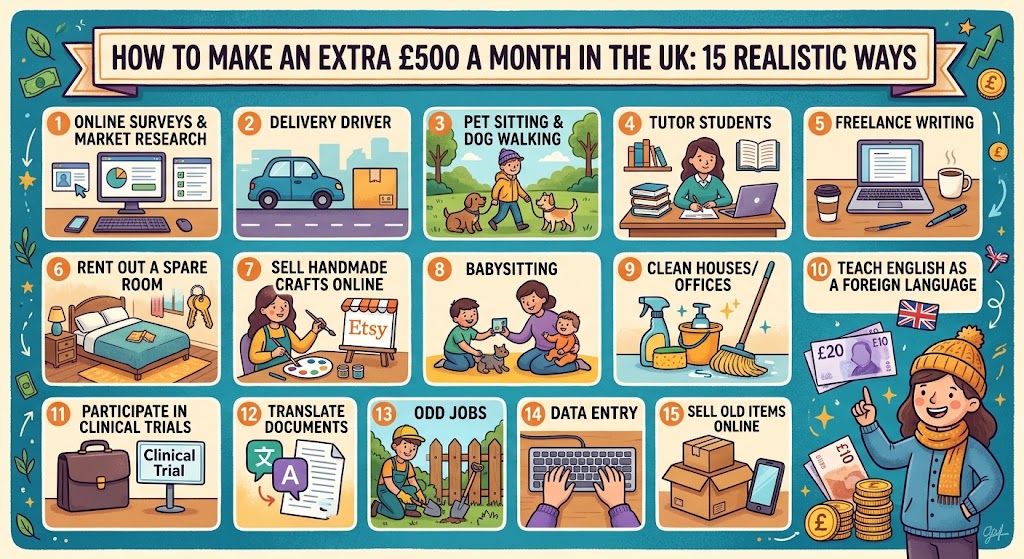
How to Make an Extra £500 a Month in the UK
£500 a month is £6,000 a year. That’s an emergency fund, a holiday, a big chunk of debt cleared, or the first step towards investing. It sounds like a lot, but for most people it’s reachable by combining two levers: spending less on things you don’t value, and earning a bit more from what you already have.
This guide shows you how to do both, with realistic numbers and no get-rich-quick nonsense.
Break £500 into smaller targets
£500 is intimidating as one number. Broken down, it looks very different:
- £125 a week
- about £17 a day
- or, for example: £150 saved on bills + £200 from a side hustle + £150 from selling things you no longer use
The trick is not to find one perfect idea, but to stack three or four small ones.
Part 1: Free up money you’re already spending (£50 to £200 a month)
This is often the fastest win, because it needs no new skills and no extra hours.
1. Audit your subscriptions
Streaming services, apps, gym memberships you don’t use, magazine subscriptions, premium versions of free tools. Go through your bank statements for the last three months and cancel what you wouldn’t sign up for again today.
2. Switch or haggle on your bills
Broadband, mobile and insurance providers often reward new customers more than loyal ones. When your contract ends, compare deals and call your provider before renewing. A SIM-only deal can be much cheaper than an expensive handset contract.
3. Check your energy tariff and usage
Compare tariffs regularly, take meter readings, and look for simple savings at home: draught-proofing, washing at lower temperatures, turning appliances off at the wall.
4. Plan your food shop
Meal planning, a shopping list, own-brand products and batch cooking can make a real difference to a household’s food bill, as can cutting back on takeaways and meal deals.
5. Check what you’re entitled to
Many people miss out on benefits, discounts or council tax reductions they qualify for. Use an independent benefits calculator to check, especially if your circumstances have changed recently.
Part 2: Quick cash from what you own (£100 to £300, often one-off)
6. Sell what you no longer use
Clothes, electronics, furniture, baby equipment, books and games. Online marketplaces and local selling groups make it easy. Good photos, honest descriptions and fair prices sell fastest.
7. Rent out your stuff or space
A driveway near a station or stadium, a garage for storage, tools or camera equipment you rarely use can all earn regular money through dedicated platforms.
Part 3: Earn regular extra income (£150 to £500+ a month)
8. Freelance your work skills
Writing, design, bookkeeping, admin, translation, video editing or web design can be sold to small businesses, either directly or through freelance platforms. Even five to eight hours a week at a fair hourly rate can get you most of the way to £500.
9. Tutoring
Subjects like maths, English and sciences are in steady demand, especially before exams. Online tutoring removes travel time.
10. Pet sitting and dog walking
Low startup costs and strong demand in most areas. Regular weekday walks for two or three dogs can add up quickly.
11. Cleaning, gardening and odd jobs
Reliable, well-reviewed help is hard to find. Local community groups and word of mouth are often the best marketing.
12. Rent out a spare room
The government’s Rent a Room scheme lets you earn a set amount tax-free each year from letting furnished accommodation in your own home. Check the current threshold and the rules (including your mortgage or tenancy agreement) on GOV.UK before you start.
13. Weekend or evening work
Hospitality, retail and events often need extra staff, especially around Christmas and summer. Less flexible than a side hustle, but reliable income.
14. Delivery and driving
Flexible, but calculate your real earnings after fuel, wear and insurance before committing.
15. Build something that grows
A blog, YouTube channel, newsletter or e-book won’t pay £500 next month. But over a year or two, it can become a lasting income stream. Do it alongside a faster option.
Three sample £500 plans
| Plan | Mix | Time per week |
|---|---|---|
| The saver | £150 cut from bills and subscriptions + £350 freelancing | 5 to 6 hours |
| The local hustler | £100 from bills + £250 dog walking + £150 selling items | 6 to 8 hours |
| The homeowner | Spare room under Rent a Room + £50 driveway rental | 1 to 2 hours |
These are illustrations: what you earn depends on your area, skills and the prices you set.
Don’t forget tax
- The £1,000 trading allowance: in the 2026/27 tax year, you can usually earn up to £1,000 in gross trading income without registering for Self Assessment. Above that, you’ll usually need to register by 5 October after the end of the tax year.
- £500 a month is £6,000 a year, well above the trading allowance. If most of it comes from self-employment, plan to register and keep simple records.
- Selling your own unwanted items is generally not trading.
- Rent a Room income has its own separate allowance.
Keep a simple spreadsheet of what you earn and spend from day one. Our guide to the best UK side hustles covers the tax rules in more detail.
Mistakes to avoid
- Chasing “passive income” schemes that cost money upfront and promise easy returns.
- Paying for courses before earning anything.
- Underpricing your time.
- Spending the extra money as soon as it arrives. Send it automatically to a separate savings account.
- Burning out by adding 20 hours of work on top of a full-time job.
Frequently asked questions
What is the fastest way to make £500?
Selling items you no longer use and cutting unused subscriptions and overpriced bills usually bring the quickest results.
Can I make £500 a month from home?
Yes, through freelancing, online tutoring, or a combination of savings and online selling.
Will extra income affect my benefits?
It can, particularly with Universal Credit. Report your earnings and check how they affect your payments before you start.
Final thoughts
An extra £500 a month rarely comes from one big idea. It comes from stacking small, realistic wins: stop overpaying, sell what you don’t need, and pick one side hustle that fits your skills and schedule. Then put that money to work for your future.
General information only, not financial or tax advice. Thresholds and rules can change; check GOV.UK for your situation.

0 Comments